
Canadian travel is having a moment, especially when it comes to exploring the north. That’s according to Al Pace, owner of Canoe North Adventures, an award-winning guiding and outfitting company that specializes in multi-day wilderness canoe trips to the Northwest Territories and Yukon where guests fly by float plane to paddle remote and iconic rivers.
“We are finding there’s such a passion and commitment from Canadians to explore their own country,” said Pace, who runs the company with his wife Lin Ward and their son Taylor. “We will soon be fully booked for 2025 and are already booking strongly for 2026.”
Pace is also a renowned Canadian studio potter who opened Farmhouse Pottery in Mono in 1977. He’s proud to mention that his Dancing Loon Plate was presented to Queen Elizabeth II as a gift from Canada, and his iconic Canoe Vessel was presented to Pope John Paul II by the Province of Ontario. You might wonder how a famous ceramic artist became a professional river guide.
“I was born into a canoeing family with five brothers and sisters and my mom and dad were big canoe trippers,” said Pace. “Through my 20’s as a young artist making pottery, I would take time out every summer to go with friends to the Yukon or Northwest Territories and do a three-to-four-week epic canoe trip. I used to write a studio newsletter and one year I wrote about the canoe trip in the Yukon that Lin and I had taken. People sent me notes and said if we had room on a future trip, they would come in a heartbeat. That started it all.”
The couple led their first guided canoe trips during the summer of 1987.
“Lin and I did everything,” said Pace. “We took a month off from the studio-gallery and did two trips back-to-back. We would pack the food, develop the menus, set the routes and guide the trips. About 15 years later our brand was starting to get a lot of traction in Ontario and we needed to expand. We wanted a home base, so we constructed a small basecamp-lodge in the Northwest Territories where float planes are docked. Today we run about 16 to 18 different trips per season, and most are 11-day trips with 10 guests and two guides per trip.”
One of their most popular trips is the Heart of the Nahanni Trip which takes paddlers into the heart of Nahanni National Park as they paddle past mountain ranges and finish at Náįlįcho (Virginia Falls). Intermediate or advanced canoeists will thrill at the excitement of The Mountain River Adventure which Pace calls the most coveted whitewater canoe trip in Canada.
In addition to many seasoned, repeat “alumni” canoeists, the company attracts novice and intermediate paddlers.
“I love to tell this story—people often come into my pottery gallery to buy a wedding gift and six months later they are in a vintage float plane flying into the mountains and wondering, how did I get here?” said Pace.
Al, Lin and Taylor teach canoeists the Eight Critical Skills.
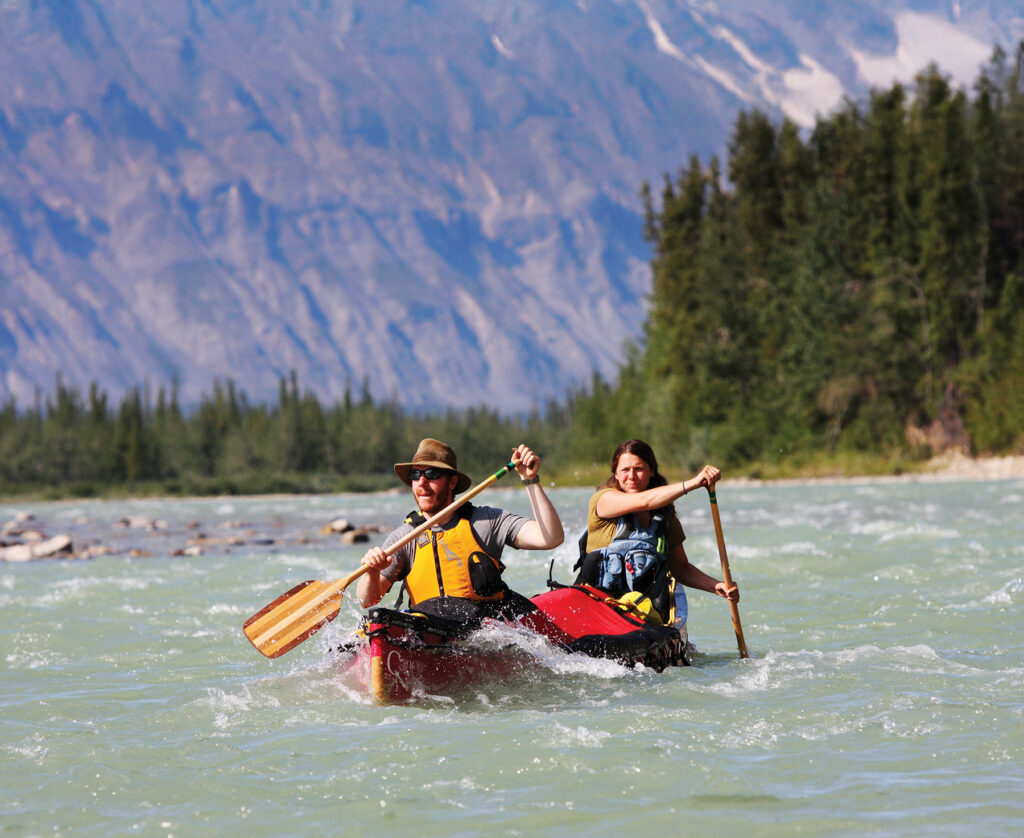
“We have learned that over 30 years that if people know these eight things, we can safely get them down all our various rivers in the north. We capsize very few canoes.”
Pace witnesses a transformation in guests during the 10-day adventures.
“When people arrive, they are so excited they have been planning and dreaming of this trip and now it’s happening in real time. They arrive at our lodge and meet on our giant deck where they dump out their gear and transfer it into barrel packs and dry bags. The excitement is palpable. The first charter flight goes out at 8:30 a.m. the next day. These are vintage planes that wind up and make a puff of smoke and off they go into the mountains. There may be some queasiness taking off in a float plane, but the view out the window is so stunningly sublime that their jaws drop. When the plane lands and backs up onto a beach and all the gear comes out and then takes off, there is a thundering silence! There is this river streaming by as the rivers we paddle are frisky—they are going down through the mountains with continuous drop. We start loading the canoes and go over some safety stuff and paddle down to our first camp. We make sure that the paddle partners are aligned. Our guides would typically be paddling with the least experienced paddlers. We want each canoe to have a certain level of talent so there’s safety right out of the gate.”
The first few days, guests are learning the ropes of how to set up their tent, etc. but by day four or five paddlers have a certain level of confidence as they realize they can do this. Late in the trip they get to the state of reflection, gratitude, and understanding of privilege to be able to have a country like Canada and to be able to explore its pristine beauty in such a unique way.
What surprises people the most on these wilderness adventures?
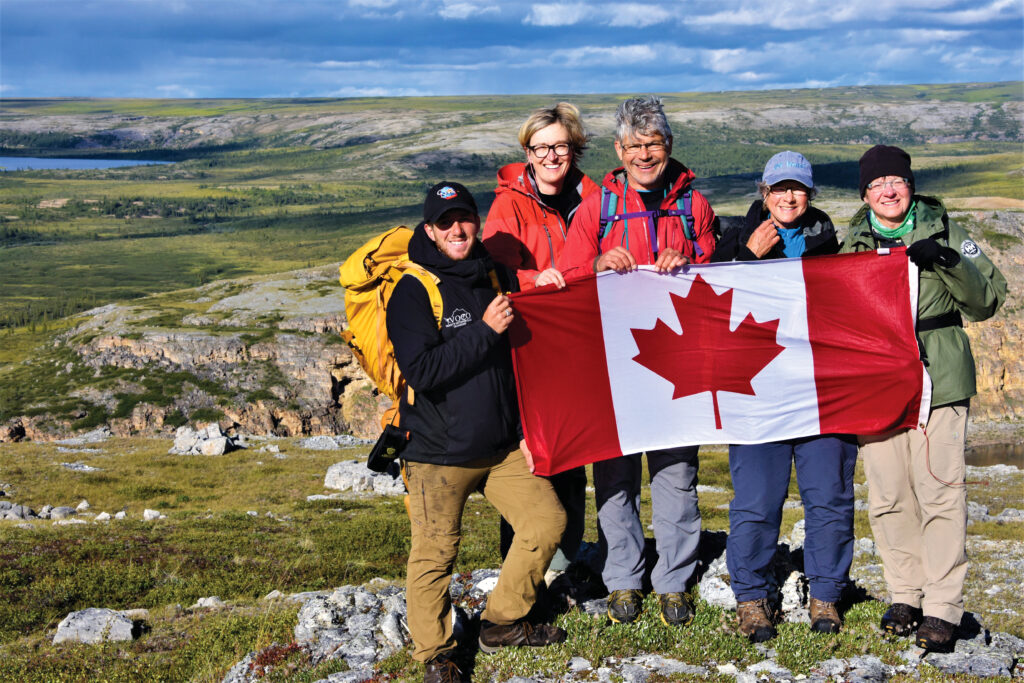
“There’s a ridiculous amount of laughter and sheer joy in the adventure. A lot of us forget what a belly laugh feels like,” Pace said. “People are making memory after memory. For first timers it’s an eye-popping experience – learning canoe skills, experiencing the dramatic beauty of the northern landscape, enjoying the comradery.
Food is a huge part of what we do. We take a lot of fresh food, we have recipes, salads, we have barbecued meats.”
Pace and his team are asked a lot of questions about canoeing in the wilderness, such as how to prepare for extreme weather or what to do if they see a bear.
“Our job as an outfitting and guiding company is to manage and mitigate risk,” he said. “We carry satellite phones that offer limited technology, and our guides call into our lodge ever other night primarily for weather updates and respond accordingly. We do travel in bear country and teach bear protocol and awareness. One of the wonderful things about the bears in our region is they are extremely wild and predictable. Because we are a large group of 12 people with bright red canoes and yellow tents, we have a very big footprint. We camp in open areas on sandbars and gravel bars rather than back in the bush so we want to make sure that bears can see that we have a large presence. When we do on occasion see a bear, they just turn and run.”
Although the company has never encountered an evacuation for a medical emergency, they have a medical evacuation protocol in place with connections to locally operated helicopter and aviation services.
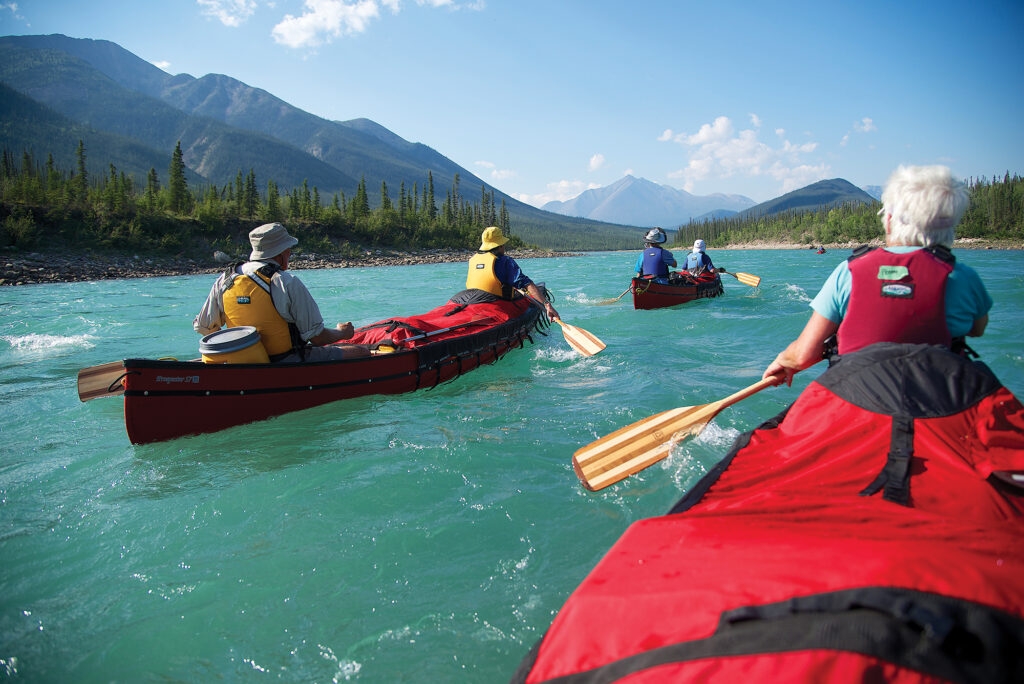
Asked to name his favourite river to paddle, Pace hesitates—there are so many to choose from. “I have a lot of favourite places on a lot of rivers, but the Keele River is the river that helped us develop our operation. It’s stunningly beautiful and I’ve led over 40 groups on that river over 25 years.”
One of the things Pace enjoys most about his work is sharing his love of the north with others.
“How we know that a group has really succeeded on a trip is when they tell us they don’t want the trip to end.”