
Kingston’s history as ‘Limestone City’
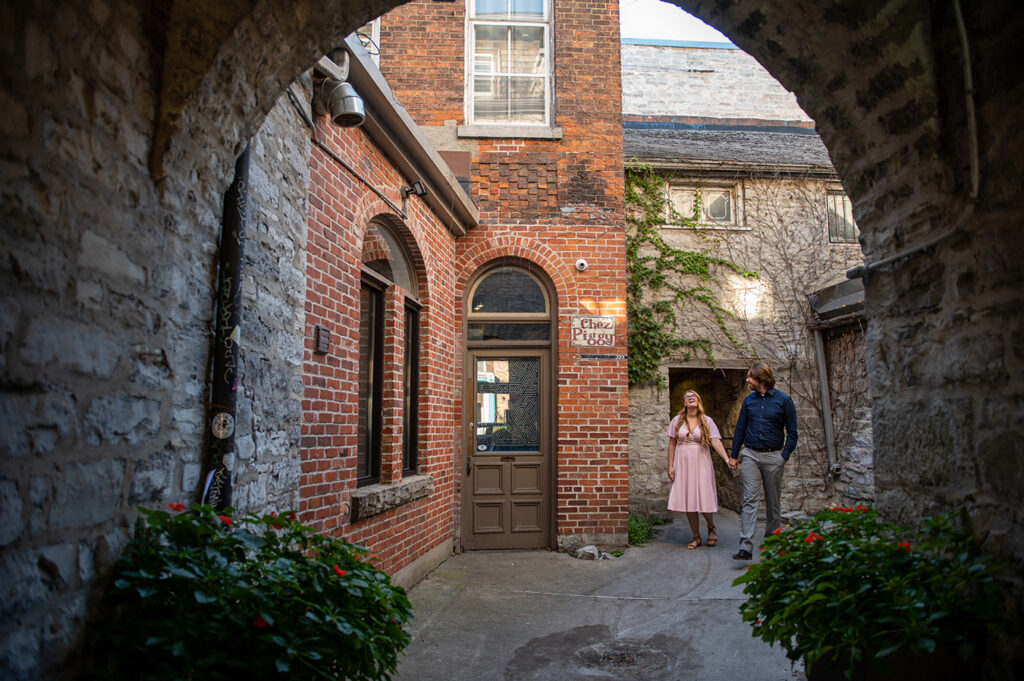
Walking through Kingston’s historic Martello Alley, a curved stone alleyway once used for horse-drawn carriages, feels like you have suddenly stepped back in time. The alley leads to Rochleau Court, an expansive stone courtyard serving as an outdoor patio oasis for Chez Piggy, a beautiful upscale restaurant housed in a two-story limestone building which was once a stable. Sitting on the patio, surrounded by picturesque limestone structures, you almost think you are in Old Quebe City, when in fact, you are in downtown Kingston, Ontario.
This walkable city of 133,000 people has an old-world European charm thanks to its abundance of limestone structures. A massive fire in downtown Kingston in 1840 led to a ban on wooden buildings and the material of choice became limestone, earning the city the name ‘Limestone City’.
A few notable limestone structures include Kingston City Hall, the Old Kingston Post Office, Grant Hall at Queen’s University, Fort Henry and the Frontenac County Court House which was originally designed to house the Parliament of Canada when Kingston was the capital city of Canada.
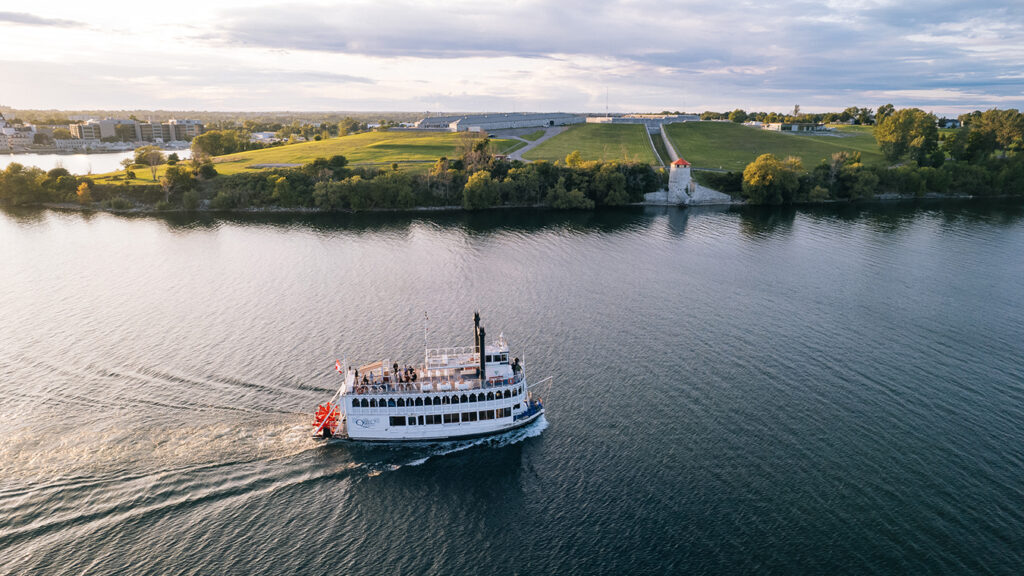
Not only is Kingston rich in architectural beauty, but it also boasts an expansive waterfront where sailboats and ferries cruise the harbour, while joggers and cyclists enjoy the eight-kilometer waterfront trail. Situated where the St. Lawrence River, Rideau Canal and Lake Ontario meet, visitors can take a ferry to Wolfe Island or take a scenic Thousand Islands Cruise. Kingston’s downtown bustles with sidewalk cafes, restaurants, microbreweries and coffee shops. And like Paris, France, chain restaurants are cleverly housed in historic buildings with only a small sign marking their presence.

“The magic of Kingston lies in how effortlessly it blends the old with the new,” said Ashley Bradshaw, destination development manager at Tourism Kingston. “It’s a place where history echoes through limestone streets, but creativity and culture take centre stage. Whether you’re drawn by the waterfront, inspired by the city’s deep musical roots, or just here to explore something unexpected—like a tucked-away gallery or a rooftop patio—Kingston rewards curiosity. It’s a city best experienced slowly, over a few days, so you can uncover the layers that make it truly one-of-a-kind.”
Here are just a few of the must-see sites that bring Canada’s history alive in unique and interactive ways for visitors.
Kingston Penitentiary Tour
Originally constructed in 1833, Kingston Pen closed in 2013 and is now open for guided tours. Step inside the enormous stone walls of Canada’s oldest penitentiary and experience a guided tour with the bonus of hearing fascinating stories and personal accounts from former prison guards and other staff as you learn about prison life including daily routines, stories of escapes, prison riots and more. As you tour the cell blocks and common areas, visitors see what prison life was like, from historic cells dating back to the 1800’s, to modern-day isolation cells and the common-area rotunda where the prison riot of April 1971 broke out when inmates took over the prison for four days. Several guards were taken hostage and two inmates died during the riot which drew national attention and led to reforms within the Canadian prison system.
There are several tour options including the 1.5-hour Standard Tour, offered from May 1 to October 31. Located directly across the street is Cedarhedge, the former Wardens’ residence, where visitors can discover unique exhibits and objects from the history of Canada’s federal prisons.
Great Lakes Museum National Historic Site,
home of the S.S. Keewatin
Kingston can now boast another unique tourist attraction, the S.S. Keewatin, a Titanic-era steamship that is docked at the Great Lakes Museum National Historic Site.
The S.S. Keewatin’s Passenger Experience invites visitors to step aboard the steamship for a guided tour as you explore the decks, first-class cabins, library, dining room and more. The 75-minute tour gives visitors a glimpse into the bygone era of first-class passenger travel as you are transported through the decades.
The Great Lakes Museum is celebrating its 50th anniversary this year. The museum connects visitors with the region’s maritime history while telling the story of Kingston’s role in the history of the Great Lakes.
Kingston Public Market
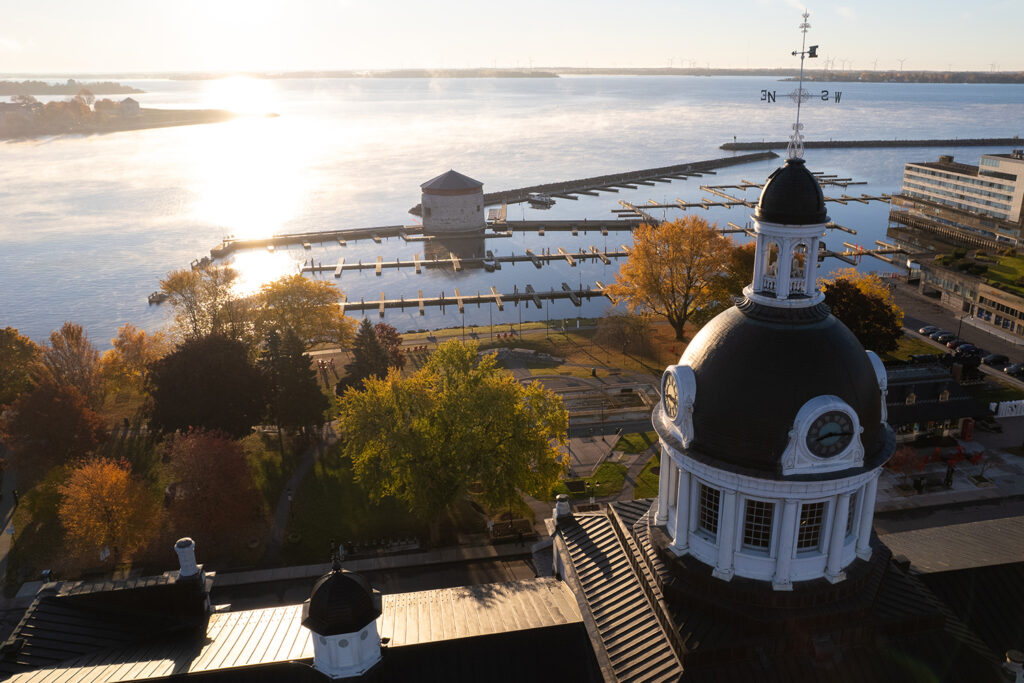
Since 1801, the square behind the domed Kingston City Hall has been the home of the Kingston Public Market, the oldest and longest-running public market in Ontario. For more than 220 years, the Farmer’s Market has brought people together to shop for local produce, baked goods, crafts and artisan products. There are also several unique shops to discover in the downtown area including Cooke’s Fine Foods, Kingston Olive Oil Company, General Brock’s Commissary, the Antique Emporium and more.
Film, Literary, Music and Historic
Neighbourhood Walking Tours
Pack your headphones, as Kingston offers a variety of self-guided walking tours. The Film Tour invites visitors to learn about Kingston’s cinematic history as you visit several spots which served as film locations for movies and TV shows including Crimson Peak, Star Trek: Discovery, Reacher, Alias Grace and The Mayor of Kingstown.
The Literary Tour explores connections to notable Canadian authors such as Robertson Davies and Bronwen Wallace while Kingston’s Music Tour immerses visitors in the musical history of the city, from rock to pop to classical, as visitors explore some of the places where renowned musicians got their start, including Kingston’s own The Tragically Hip.
The Haunted Walk Ghost Tours including the Original Haunted Walk of Kingston
The Original Haunted Walk is a spooky, fascinating tour which will give you chills and thrills as you explore Kingston’s Sydenham Ward, a designated historic district and home to some of the finest 19th century architecture in Canada.
Guide Liam, dressed in a long black cloak and carrying a lantern, leads a tour focused on haunted hotels, burial grounds and historically spooky sites such as Kingston City Hall, the Frontenac Courthouse, and spookiest of all—McBurney Park, aka Skeleton Park. The park is located on top of a hidden burial ground and rumoured to be the home of numerous ghost sightings, grave robberies and mysterious happenings.
Several other Haunted Walk tours are available, including Fort Henry, Queen’s University and the S.S. Keewatin.
Fort Henry, a UNESCO Designated
World Heritage Site
Situated along with the Rideau Canal and Kingston’s Fortifications Network, Fort Henry officially opened its doors as a living historic museum in August of 1938.
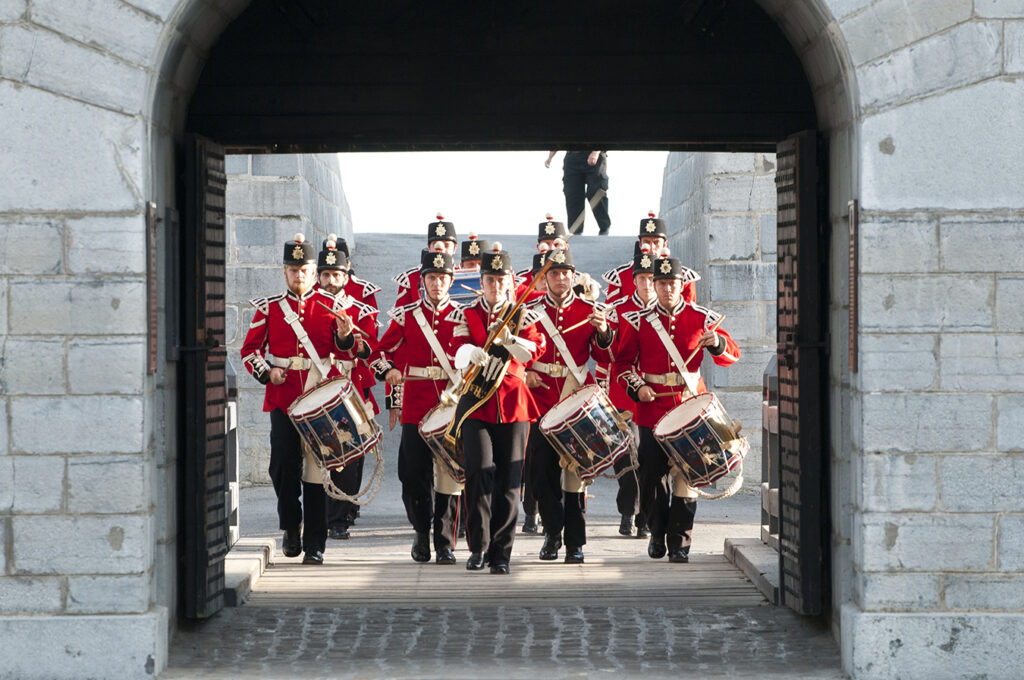
The Fort was built from 1832 to 1837 by the British in response to invasion by the U.S., the British Army garrisoned Fort Henry until 1870 when Queen Victoria’s troops were pulled out of Canada. During World War I, Fort Henry was used as an internment camp for political prisoners but after the war, the Fort fell into disrepair. The Fort was restored from 1936 to 1938 as a Federal/Provincial project. During World War II, the site became Camp 31, a Prisoner of War camp, and finally reopened to the public in 1948.
Sitting high on a hill overlooking Kingston Harbour, towering limestone walls surround the prison. Visitors step through the castle-sized wooden door which provides entry to the open courtyard. Dressed in the uniform of a British Private, our knowledgeable guide Private Reid provides an interesting and informative tour through the realm of 19th century life for military personnel as well as the civilian population. The tour includes visiting the quarters of various military ranks – with original furnishings – as well as the fort’s ammunition room, kitchen, schoolroom and more.
Fort Henry also hosts numerous special events including the award-winning Sunset Ceremonies held during the summer months.
Murney Tower Museum
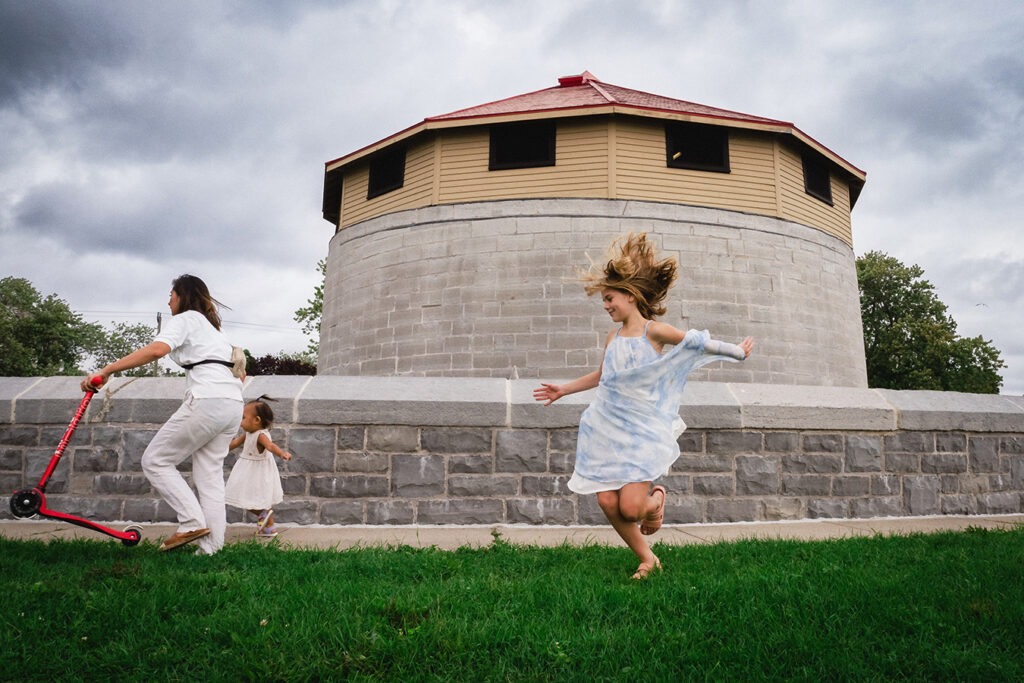
Driving around Kingston you will notice Murney Tower, one of four round limestone Martello Towers constructed as part of the city’s fortifications in the 1840s.
“The towers are part of the UNESCO World Heritage Site of the Rideau Canal and Kingston Fortifications National Historic Site of Canada with Murney Tower being the oldest operating museum in Kingston offering guided tours, audio tours, interactive exhibits and educational programs,” said museum curator Alison Dringenberg. “Murney Tower Museum is celebrating the 100th anniversary this year.”
The tower was used for several decades as a barracks for soldiers and their families.
Crossing the bridge over a dry ditch and entering the round stone tower, it’s hard to imagine that six families lived together on one floor. Today the museum houses a collection of over a thousand domestic and military artifacts which portray 19th century life. This includes two cannons on the main level as well as the thirty-two-pounder Blomefield Cannon on the top level. Visitors can climb up the circular stone staircase to see the hulking cannon which weighs in at 6,429 pounds and requires seven men to move it along its circular train track running around the circumference of the tower.
Bellevue House National Historic Site
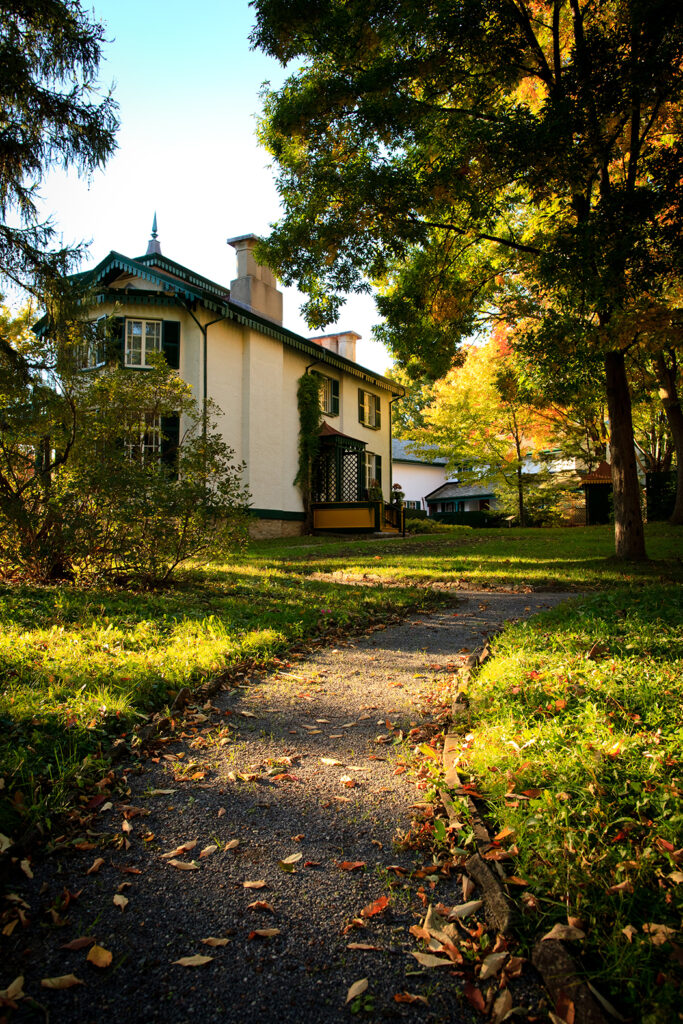
Bellevue House National Historic Site was the home to Canada’s first Prime Minister, Sir John A. Macdonald, from 1848 to 1849. The home is one of the finest examples of Italianate Villa style architecture in Canada, built around 1840 for Charles Hales, a wealthy Kingston merchant. Sir John A. Macdonald and his family lived in the home in 1848 while he was an inspiring young lawyer, prior to becoming Prime Minister.
“Bellevue House National Historic Site focuses on the challenging legacy of Sir John A. Macdonald with many new exhibits and updated narratives,” said Tamara van Dyk, national historic site & visitor experience manager. “Today Bellevue House shares a more complete history of Sir John A. Macdonald, Canada’s first Prime Minister, within the walls of the picturesque manor.”
Visitors can enjoy a self-guided tour available on the free Parks Canada App (parks.canada.ca/voyage-travel/app) or the popular guided Bellevue, in Brief and Unpacking Macdonald tours. A pathway through the gardens and orchard takes visitors to the main house where our experienced guide ‘Jake’ welcomes us at the front door, dressed in top hat and tails to reflect the manner of dress of the 1800’s.
“Each room, from the dining room to the parlour, to the bedrooms and kitchen, is carefully curated with antique and reproduction furniture to reflect what the home would have looked like when the Macdonald family lived here,” said van Dyk.
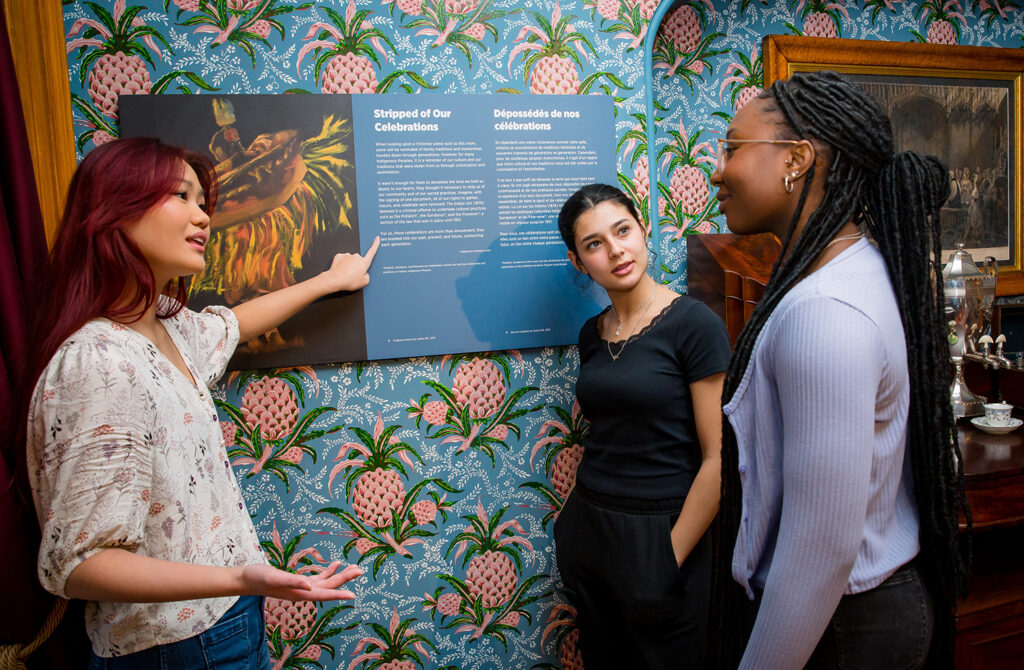
What is truly unique about Bellevue House is the many interactive activities that encourage guests to talk about Canada’s history and future.
“New exhibits were designed with the Community Advisory Committee including members of the local Indigenous community, Kingston community, and historical society members, and Parks Canada team members.”
Bellevue House is open to the public from May to October.